Ancient Reliefs, Ruins, and Artifacts Show How the Past Remains Visible
GlacierCourier
Updated
Advertisement
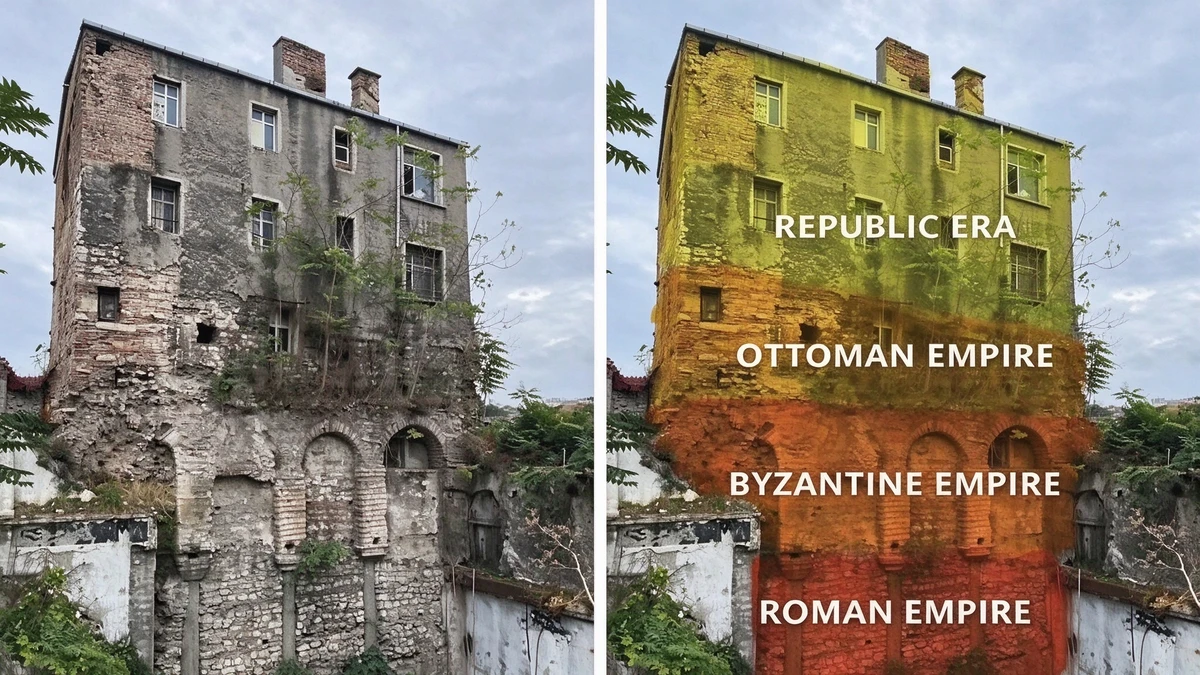
One building presented through several historical layers
This split image pairs a photograph of an old, weathered building with a color overlay that divides its façade into horizontal zones. The underlying structure has irregular masonry, mismatched windows, patches of plaster, and arched openings near the base. Plants grow around and across parts of the walls, softening the hard geometry. In the second panel, colored bands and labels mark different levels, turning the same view into a visual explanation. The comparison emphasizes how an annotation can guide attention without changing the building’s visible outline.
The words in the overlay assign historical names to the colored sections, but the image alone does not verify those claims or establish the building’s full chronology. The safest visual reading is to treat the panel as an interpretive graphic layered over a photograph. Its simple color coding makes the stacked arrangement easy to follow, while the original view reveals the masonry details that the overlay partly covers. Together, the two halves show both the appeal and the limits of visual timelines: they can make a layered façade legible at a glance, yet the labels remain an interpretation that would need independent context to confirm.
Advertisement
About the Author
GlacierCourier
Thoughtful about craft, ruthless about fluff.























Comments
Leave a Comment
Your email address will not be published. Required fields are marked *