Small Animals, Close-Up Moments, and the Details That Make Each Image Distinct
HorizonWeaver
Updated
Advertisement
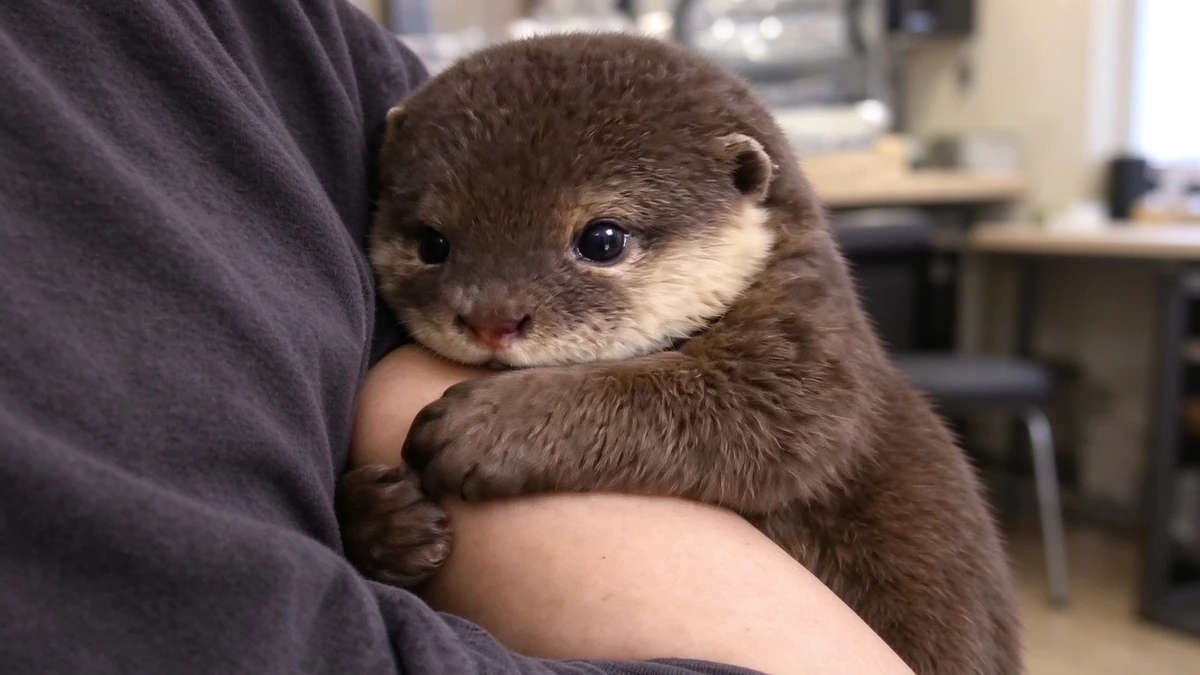
A second close view of the young otter
This close portrait returns to the young otter held against a person’s dark sleeve, now from a slightly different angle. Its head turns toward the side, showing the rounded cheek, pale muzzle markings, small ear, and dense brown fur in profile. Both forepaws gather over the person’s arm, which crosses the lower part of the image and supports the animal’s compact form. The otter’s eyes remain prominent, though its sideways gaze gives the composition a quieter, less direct feel than a face-on portrait.
The background is softly blurred, with indoor furniture and a pale tabletop reduced to muted shapes. This keeps the focus on the relationship between the otter’s small body and the human arm beneath it, without identifying the person or suggesting anything beyond the visible hold. Dark fabric, warm fur, and light skin form three broad tonal areas that help organize the frame. Fine strands around the head and paws add texture, while the gentle curve of the arm steadies the composition. The image’s emphasis is on closeness and detail, not on an unseen setting or activity.
Advertisement
About the Author
HorizonWeaver
Helping readers upgrade their thinking without the jargon tax.







Comments
Leave a Comment
Your email address will not be published. Required fields are marked *