Ancient Stone Sites in View: Carved Monuments, Ruins, and Hidden Spaces
LanternWarden
Updated
Advertisement
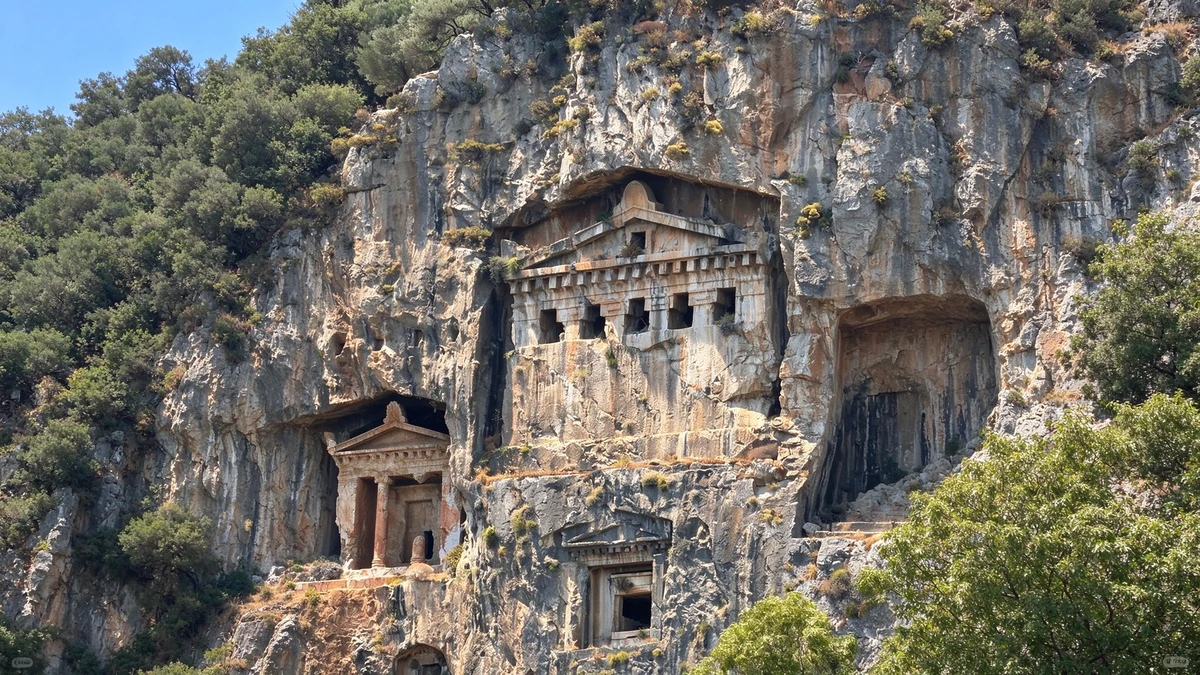
Rock-cut tomb facades emerge from a rugged cliff
Several architectural facades are cut into the face of a steep, rugged cliff. The largest sits high near the center, where a framed opening and rows of columns create a house-like outline within the rock. Smaller facades appear lower down, separated by uneven stone, shadowed cavities, and patches of vegetation. Their straight edges and classical-looking details contrast with the irregular cliff surface around them. Sunlight picks out pale gray and warm brown tones, making the carved openings visible while leaving deeper recesses dark.
The image’s scale comes from the relationship between architecture and landscape. Trees gather along the upper edge and at the sides, while the cliff occupies most of the frame, so even the largest facade appears integrated into a much broader rock face. The openings are distinct but not arranged in a single neat row; their varied heights and sizes encourage the eye to move across the cliff. This setting makes the boundary between built form and natural stone especially striking. Instead of standing apart as a separate building, each facade seems to emerge from the surface around it, with its geometry brought into focus by the surrounding roughness.
Advertisement
About the Author
LanternWarden
I curate mental models to help you navigate uncertainty with more confidence.























Comments
Leave a Comment
Your email address will not be published. Required fields are marked *