Ancient Reliefs, Ruins, and Artifacts Show How the Past Remains Visible
GlacierCourier
Updated
Advertisement
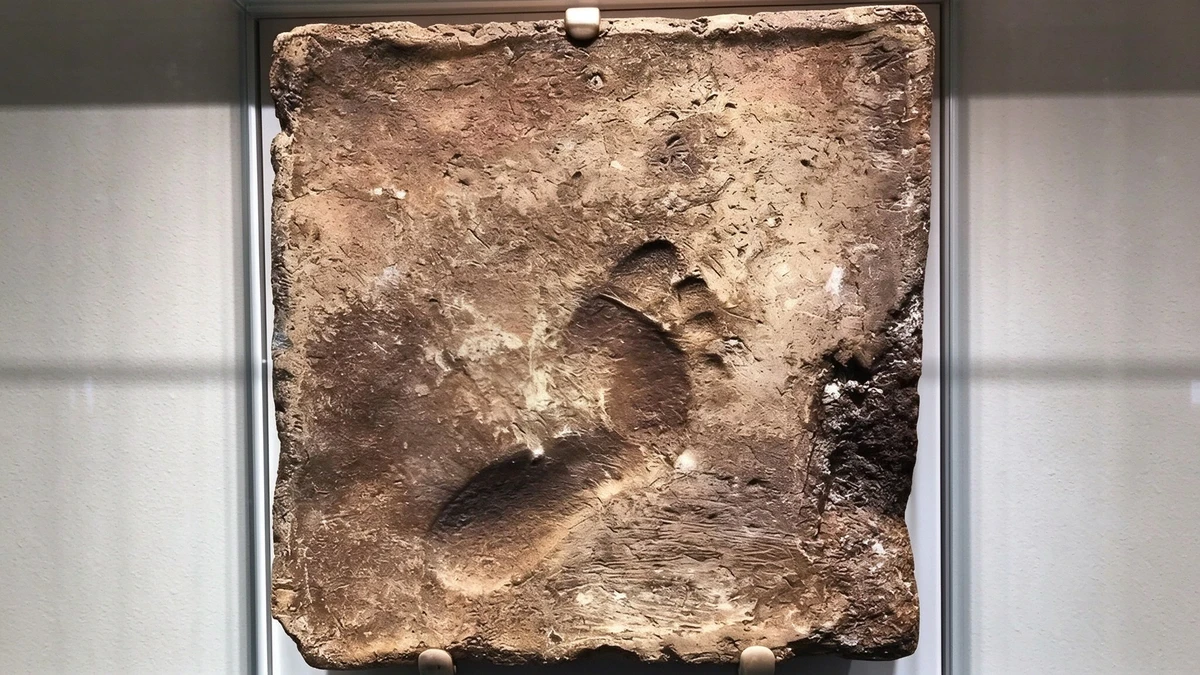
A weathered tablet with a faint human outline
This small, irregular tablet is dominated by its mottled brown surface. Pale and dark patches, pits, scratches, and uneven edges make the object appear markedly different from a smooth, newly cut slab. Near the center, a darker outline seems to form a seated or crouching human shape, though erosion and surface damage obscure its details. Rather than presenting a crisp scene, the tablet offers fragments that the viewer has to study against the surrounding texture.
The museum supports and light-colored wall frame the object without distracting from it. Their clean lines emphasize the tablet’s uneven perimeter and the contrast between its rough face and the orderly display. Light falls across the surface at an angle, picking out ridges and depressions while leaving some areas in shadow. This makes the faint figure easier to notice but does not resolve every uncertainty. The image is a reminder that the visible condition of an artifact shapes how it can be read: here, texture and loss are as prominent as the remaining marks.
Advertisement
About the Author
GlacierCourier
Thoughtful about craft, ruthless about fluff.

























Comments
Leave a Comment
Your email address will not be published. Required fields are marked *