Wildlife in Close View: Patterns, Pauses, and Movement Across Land and Water
MosaicRanger
Updated
Advertisement
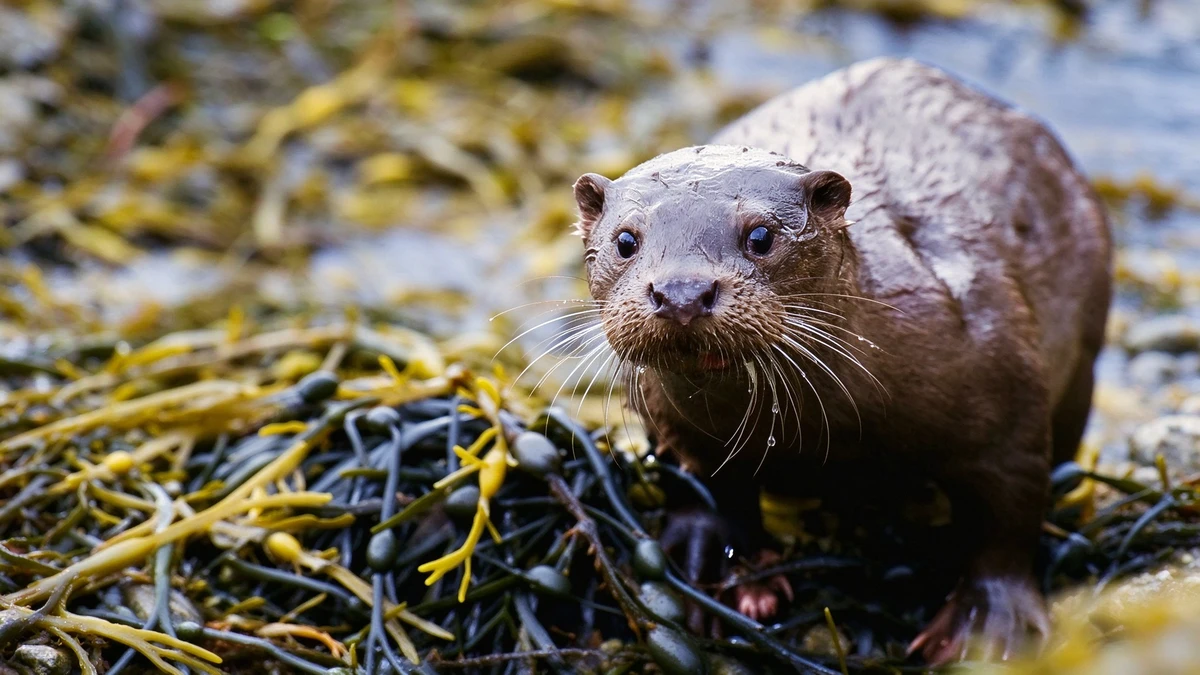
An otter looking toward the camera
An otter faces the camera from a bed of dark and golden aquatic plants. Its rounded head, small ears, glossy eyes, and long pale whiskers are shown in close detail. The whiskers fan outward across the lower part of its face, forming fine lines against the darker background. Its brown coat appears slick and textured, while water droplets cling around the muzzle. The direct gaze gives the portrait an immediate, curious presence without needing any imagined expression or story.
Water and tangled vegetation surround the animal, with soft blue-gray tones in the background balancing the warmer browns and yellows in the foreground. The otter's body angles toward the right, but its face turns squarely toward the viewer, creating a lively shift in direction. Shallow focus keeps attention on the eyes and whiskers while allowing the habitat to remain legible as a mix of water and plants. The close framing makes small details—droplets, whisker roots, and fur texture—central to the image.
Advertisement
About the Author
MosaicRanger
Synthesizer of research, patterns, and lived experience.












Comments
Leave a Comment
Your email address will not be published. Required fields are marked *