Ancient Reliefs, Ruins, and Artifacts Show How the Past Remains Visible
GlacierCourier
Updated
Advertisement
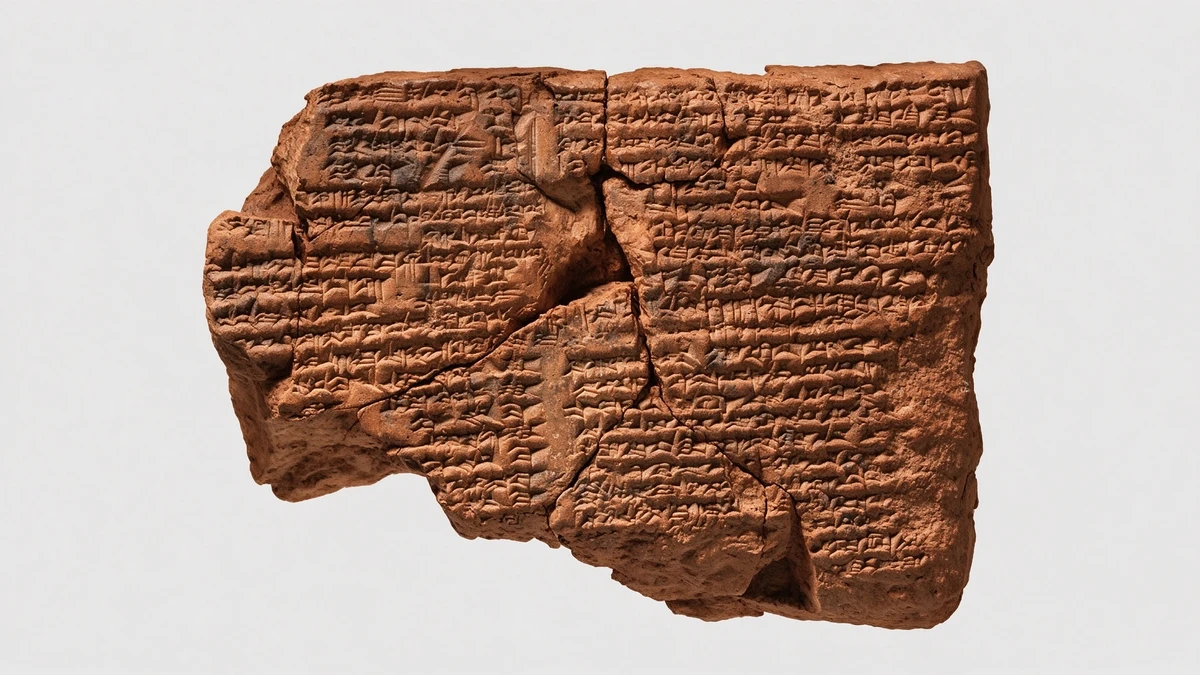
A broken clay tablet covered in rows of marks
This reddish-brown tablet has an irregular outline, chipped edges, and several visible cracks. Across its face, dense rows of small impressed marks form a compact texture that is interrupted where the surface has broken away. The tablet is shown against a plain, pale background, which makes its rough silhouette and warm color easy to distinguish. Slight variations in the rows prevent the surface from appearing mechanically uniform: some marks sit closer together, while gaps and fractures break the repeated pattern.
The object’s damaged sections are as visually prominent as its inscribed areas. A large break near the upper center divides the rows, and a deeper notch along the left edge changes the tablet’s profile. Yet much of the surface remains covered with marks, giving the object a clear sense of dense, organized inscription. Without additional context, the exact content cannot be read from the photograph, and the image does not establish the tablet’s particular history. It does, however, make the physical act of recording visible: a shaped piece of clay carries repeated signs across nearly its entire face, preserving a patterned surface despite its fractures.
Advertisement
About the Author
GlacierCourier
Thoughtful about craft, ruthless about fluff.



























Comments
Leave a Comment
Your email address will not be published. Required fields are marked *